

What do bookkeeping services include for small businesses? At the core, they cover tracking income and expenses, reconciling bank and credit card accounts, generating monthly financial reports, and keeping your records organized for tax season. Many small bookkeeping businesses also help with payroll, QuickBooks setup, basic tax planning, and cash flow tracking, so you’re not just staying compliant, but actually making informed financial decisions.
For startups and growing companies, especially those needing bookkeeping for startup businesses in Houston Texas, these services go beyond number crunching. Good bookkeeping gives you clarity, reduces stress, and helps you stay ahead. In this article, we break down what small businesses should expect from professional bookkeeping services and why choosing a dedicated, small bookkeeping business often brings better results than big, one-size-fits-all solutions.
Key Takeaways
- What services small bookkeeping businesses typically provide
- How monthly tracking and reconciliation support financial clarity
- What reports matter most and how they help you make better decisions
- Why startups in Houston benefit from local, expert bookkeeping support
- How tax-ready books can lead to fewer surprises and lower tax bills
What a Small Bookkeeping Business Should Include at Its Core
A small bookkeeping business helps you stay on top of your money by tracking income and expenses, categorizing transactions, and reconciling your accounts every month. This keeps your financial records accurate and easy to understand.
Good bookkeeping also compares your books to your bank and credit card statements, catching any errors or missing charges. When done right, it gives you a clear view of your cash flow and helps you make smarter decisions for your business.
Financial Reporting That Business Owners Can Actually Use
Reports are only valuable if they are understandable and timely. A small bookkeeping business translates raw data into clear financial statements.
Profit and Loss Statements
The profit and loss statement shows how your business is performing over a specific period. It answers one simple question. Are you making money.
Beyond the total, it reveals trends in revenue, expenses, and margins. This insight allows owners to make informed decisions about pricing, hiring, and growth.
Balance Sheets
A balance sheet shows what your business owns and what it owes. It helps you understand financial stability and long term health. Lenders and investors rely heavily on this report, which makes accuracy essential.
Cash Flow Insight
Cash flow is often where small businesses struggle. Bookkeeping services for businesses should include guidance on timing income and expenses so owners avoid cash shortages even during growth periods.
Bookkeeping for Startup Businesses in Houston Texas

Startups face unique challenges, especially in competitive markets like Houston. Bookkeeping for startup businesses in Houston Texas requires more than basic record keeping.
Early Stage Setup and Systems
Many startups begin with messy records or no system at all. A small bookkeeping business sets up accounting software correctly from day one. This includes chart of accounts structure, automation, and reporting workflows that grow with the company.
Compliance and Local Awareness
Startups must comply with state and federal requirements. Proper bookkeeping ensures payroll taxes, sales taxes, and filings are tracked correctly. This reduces the risk of penalties and unexpected bills.
Financial Guidance for Growth
Startups often grow quickly. Bookkeeping should adapt as revenue increases, contractors are hired, or employees are added. A small bookkeeping business provides guidance during these transitions so growth does not create chaos.
Tax Ready Bookkeeping and Proactive Planning
One of the biggest gaps in competitor content is the connection between bookkeeping and tax planning. A small bookkeeping business bridges this gap.
Clean Books Mean Better Tax Outcomes
Accurate bookkeeping ensures deductions are not missed and income is reported correctly. This directly impacts how much tax you pay. When books are organized throughout the year, tax preparation becomes smoother and less expensive.
Ongoing Tax Awareness
Bookkeeping services for businesses should support year round tax awareness, not just year end filing. This includes tracking deductible expenses, estimating quarterly taxes, and planning for upcoming obligations.
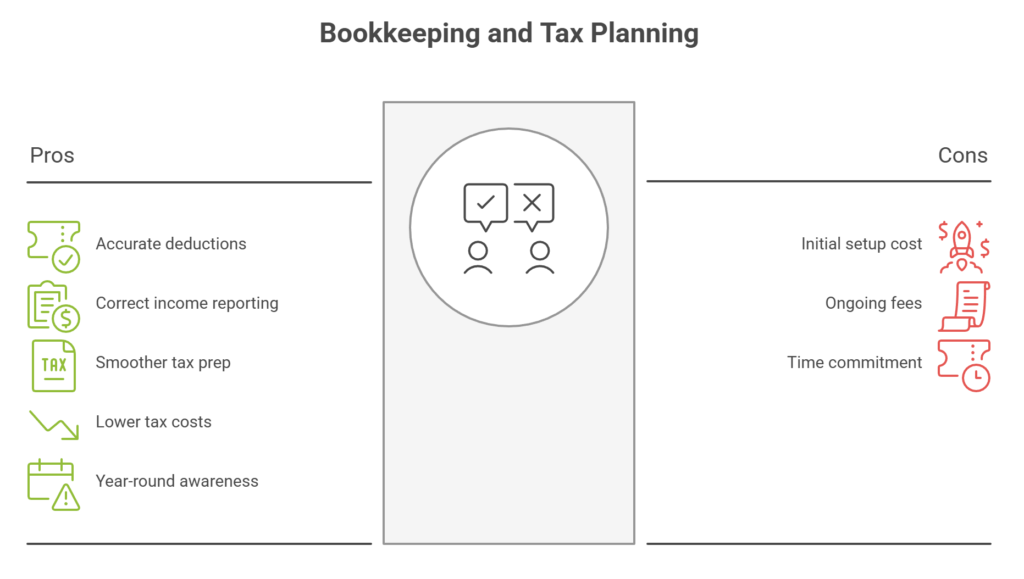
Proactive bookkeeping and tax planning help small businesses get more accurate deductions, smoother tax prep, and lower tax costs, despite initial setup.
Payroll and Contractor Support
Payroll is one of the most stressful responsibilities for small business owners. A small bookkeeping business simplifies this process.
Payroll Processing
This includes accurate wage calculations, tax withholdings, and timely payments. Errors in payroll can damage trust with employees and lead to penalties.
Contractor Payments
Many startups rely on contractors. Proper bookkeeping ensures payments are tracked correctly and reports are available for compliance requirements.
Why a Small Bookkeeping Business Is Different From Large Firms
Large firms often focus on volume. A small bookkeeping business focuses on relationships.
Personalized Attention
You are not just another account. Your business goals matter, and your bookkeeping is tailored accordingly.
Better Communication
Questions are answered clearly and promptly. Reports are explained in plain language, not accounting jargon.
Long Term Partnership
A small bookkeeping business grows with you, adapting services as your needs evolve.
Also Read: Bookkeeping Services Near Me: How to Choose the Right Firm

FAQs
1. What does a small bookkeeping business do?
A small bookkeeping business manages a company’s financial records by tracking income and expenses, reconciling accounts, and preparing reports so owners understand their financial position and stay tax‑ready.
2. What bookkeeping services do small businesses need most?
Small businesses need transaction tracking, monthly reconciliations, profit and loss reports, cash flow monitoring, payroll support, and tax‑ready bookkeeping to operate efficiently.
3. Why is bookkeeping important for startup businesses in Houston, Texas?
Bookkeeping for startup businesses in Houston Texas helps founders manage cash flow, meet tax requirements, avoid penalties, and make informed decisions in a competitive market.
4. Can bookkeeping services for businesses help save money?
Yes. Accurate bookkeeping services for businesses help identify deductions, prevent costly errors, and support tax planning, which can reduce overall tax liability.
5. How often should bookkeeping be done for a small business?
Bookkeeping should be updated monthly at minimum to ensure accurate records, timely insights, and smooth tax preparation.
Why the Right Small Bookkeeping Business Makes a Big Difference
A small bookkeeping business offers far more than basic compliance. It provides clarity, consistency, and confidence. From daily transaction management to tax-ready records and strategic insight, high-quality bookkeeping services for businesses help owners make better decisions and avoid costly mistakes. For startups and growing companies, especially those seeking bookkeeping for startup businesses in Houston Texas, choosing the right bookkeeping partner can shape long-term success.
Ready to Take Control of Your Business Finances?
If you want clear books, proactive support, and bookkeeping that actually helps you grow, contact The Bookkeeping Company today for a free discovery call. We help small businesses across the U.S. stay organized, confident, and prepared for what comes next.