
Payroll processing services are the systems and steps businesses use to calculate employee pay, withhold taxes, issue payments, and file required payroll tax reports on time. It works by collecting employee hours and wages, applying federal, state, and local tax rules, processing payments, and submitting payroll taxes to the appropriate agencies.
For small business owners, handling payroll without professional support often leads to errors, missed deadlines, and compliance risks. This guide explains exactly how payroll processing works, what payroll processing services include, and how modern payroll processing companies help businesses pay employees accurately while staying compliant, whether you operate in one state or across multiple locations.
Key Takeaways
- Payroll processing handles pay, taxes, and compliance
- Small businesses benefit from automation and expert support
- Mistakes are costly, a good provider helps avoid them
- Payroll connects to your financial reports and growth
- Choosing the right service ensures peace of mind and accuracy
Why Payroll Processing Services Matter for Small Businesses
For most small business owners, payroll is one of those tasks you absolutely have to get right. But let’s be honest, it takes time, focus, and constant attention to detail. If you’re hiring new employees often or managing workers in multiple states, the complexity grows fast.
That’s where payroll processing services come in. They handle the calculations, tax withholdings, filings, and all the fine print that can trip you up. Instead of spending hours trying to stay compliant, you get peace of mind knowing it’s all handled correctly.
Avoiding Costly Mistakes
The IRS takes payroll seriously. Each year, small businesses pay billions in penalties for late tax payments, incorrect withholdings, and misclassified employees. Many of these errors seem small at first but can lead to thousands of dollars in fines.
Quick Tip:
If you’re spending more than a few hours every pay period on payroll, it might be time to outsource. It can save you money and help you avoid headaches down the line.
What’s Changing in Payroll: Trends Small Business Owners Can’t Ignore
Payroll isn’t standing still. In recent years, more businesses have shifted to cloud-based payroll systems that offer real-time updates, mobile access, and better integration with bookkeeping tools. This change isn’t just about convenience, it’s about staying compliant as tax rules evolve and remote work becomes more common.
Another major trend is automation. Small businesses are using payroll automation to reduce errors, cut down on admin time, and stay ahead of reporting deadlines. If you’re still using spreadsheets or manual methods, it may be time to explore solutions that give you better control and fewer surprises.
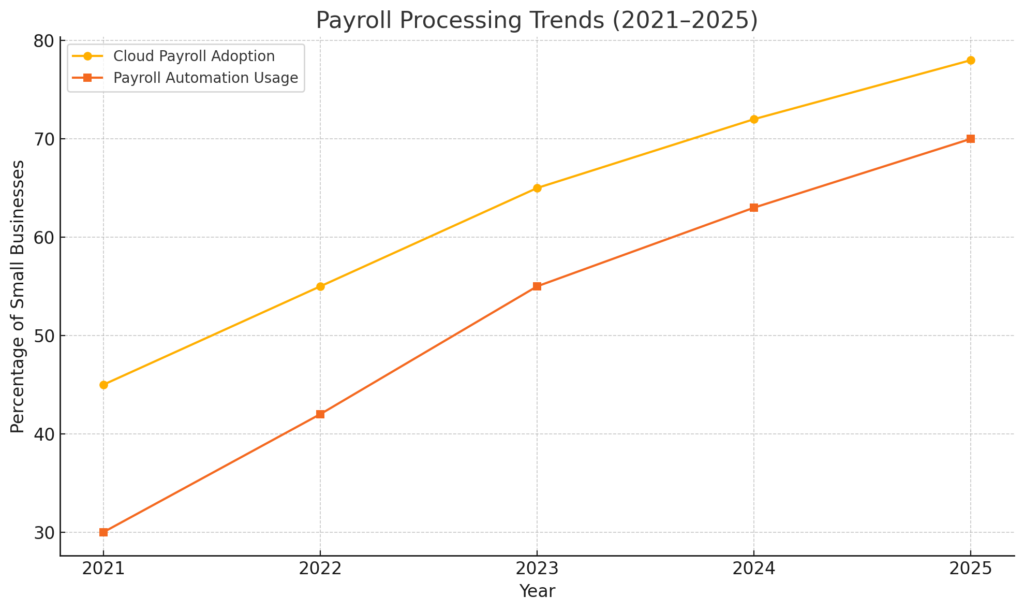
Here’s the updated graph showing payroll processing trends from 2021 to 2025. It illustrates the steady rise in cloud payroll adoption and automation usage among small businesses.
What Payroll Processing Really Covers and What It Should
When a provider says they do payroll, that can mean anything. Some just run the numbers and send payments. Others handle the full process, including taxes, forms, and filings.
If you are paying for payroll help, you should know exactly what they are doing. At a minimum, they should pay your team correctly and on time. Great providers do more. They help you stay compliant, reduce mistakes, and save hours each month.
At a Minimum, You Should Expect:
- Timely and accurate employee payments
- Federal, state, and local tax withholdings
- Proper filing of W-2s, 1099s, and other year-end forms
- Direct deposit setup and delivery
- Clear, professional pay stubs
Next-Level Payroll Services Include:
- Managing multi-state payroll for remote teams
- New hire onboarding and state reporting
- Handling deductions for benefits and retirement plans
- Paying contractors and freelancers correctly
- Keeping audit-ready payroll records
Real Story:
One of our clients, an eCommerce brand with remote staff in three states, was buried in spreadsheets and compliance issues. We stepped in, streamlined their entire payroll setup, and automated everything. Now, payroll takes minutes instead of hours—and they haven’t had a single issue since.
How Payroll Services Help You Grow

Payroll isn’t just about paying people, it’s about understanding where your money’s going. When done right, it feeds into your books, your budget, and even your hiring decisions.
Here’s What Happens When It’s All Connected
- You’ll spot labor cost trends faster
- You can forecast and hire more confidently
- You’ll know your true profit margin
From Chaos to Clarity
Businesses that sync payroll with bookkeeping see fewer errors and get monthly reports faster, no more chasing numbers.
How to Pick the Right Payroll Service Without Guessing
Choosing a payroll service can feel overwhelming, especially with so many options out there. But this decision is too important to leave to price alone. You want someone who understands small businesses and actually shows up when things go wrong.
The right provider should do more than run payroll. They should help you stay compliant, answer your questions quickly, and make the entire process easier for you and your team.
What to Look For
- Experience with small business payroll
- Knowledge of your state’s payroll laws
- Clear, upfront pricing
- Integration with software you already use like QuickBooks
- Fast, helpful support when you need it
Pro Tip:
Before signing anything, ask how they handle tax notices or audits. A confident answer tells you they’ve done it before. A vague one is a red flag.
Also Read: Payroll Processing Services: Making Payday Easy, Accurate, and Stress-Free

Frequently Asked Questions
What is payroll processing?
Payroll processing is the system of calculating employee wages, withholding taxes, submitting payroll tax payments, and issuing paychecks. It also includes preparing and filing forms like W-2s and 1099s.
Is payroll processing the same as bookkeeping?
No. Payroll processing deals specifically with employee compensation and payroll taxes, while bookkeeping tracks all financial activity in a business, including payroll expenses.
Do small businesses with just a few employees need payroll services?
Yes. Even if you only have one or two employees, you are still required to follow payroll laws. A single mistake in pay or taxes can lead to penalties.
Can payroll services manage employees in different states?
Yes. Experienced payroll providers can handle multi-state payroll by applying the correct tax rules, filings, and deadlines for each location where you have employees.
Make Payroll One Less Thing to Worry About
Payroll doesn’t have to be frustrating or time-consuming. With the right partner, it becomes a smooth, reliable process that gives you back your time and keeps your team paid on time. No more second-guessing tax filings or stressing over deadlines, just clear, consistent support that works with your business, not against it.
Most importantly, you’ll know your team is in good hands, every single payday.
Let’s Take Payroll Off Your Plate
Ready to stop stressing about payroll?
Schedule your free discovery call with The Bookkeeping Company today and find out how our payroll processing services can support your business, no matter where you’re located in the U.S.